Showing posts with label Books to Read. Show all posts

Thursday, June 19, 2014

Books to Read: The Adventures of Sherlock Holmes by A Conan Doyle (Great Illustrated Classics edition)

*First of all, Watson doesn't really do anything. They should rename this book to the Adventures of Sherlock Holmes and his Servant who is supposed to be his partner, but Sherlock just takes all of the spotlight.

I absolutely love this book. I enjoyed reading the mysteries and I'm looking forward to reading more of A Conan Doyle's works in the near future. However, I am here to recommend to you a certain edition of Sherlock Holmes. Read the title.

I love Great Illustrated Classics, and I'm repeating myself when I say that it makes it much less intimidating to read classics. Because as soon as the word "classics" is said, I immediately think about fancy shmancy, high-class things. But when I think "picture book" I think of youth and things requiring little brain power. Combine the two, and you get a tolerable way to read boring literature.

My opinion on Great Illustrated Classics drew me towards this book, which is why I recommend Great Illustrated Classics in general. But you can't miss this one. This is a combination of three of, in my opinion, the greatest Sherlock Holmes mysteries. You have the Red-Headed League, The Copper Beeches, and The Speckled Band. So, you take amazing mysteries that keep you captivated and you add pictures. It's amazing.

Now let's talk about the actual literature.

  1. The Red-Headed League. It's about a man who goes to (basically) a job interview where only red-headed people will even be considered for the job. He's hired, and has to rewrite encyclopedias all day every day. Naturally, he gets suspicious when he's told he is no longer needed out of the blue one day. And this all leads back to the young man he hired to work at his store . . .
  2. The Copper Beeches. A woman is given lots of money to work at this amazing mansion. However, the people she works for have some weird requests. For one thing, she has to cut her hair. She also has to wear a certain dress, she cannot enter one of the rooms of the house, and she has to wave away this man who seemingly waits for her outside of the house.
  3. The Speckled Band. This one is my favorite. It's about a girl who lives in a mansion with her father who is a little abusive and likes to train dangerous animals. One night, her sister dies and says it was the speckled band. You know, because nobody ever makes any freaking sense when they lay on their death beds.
Highly recommend this edition of Sherlock Holmes. I would say that I recommend this mainly to my younger audience, or teenage audience, or to anyone who has not delved much into the mystery genre. Always be willing to try something new when you're reading.

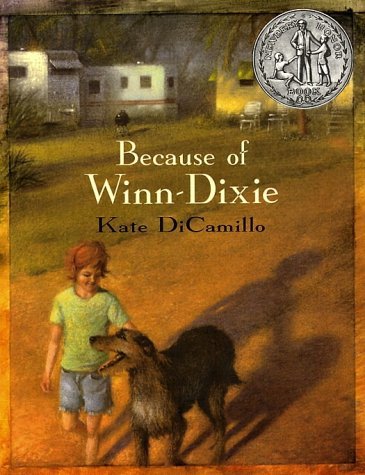
Books to Read: Because of Winn-Dixie by Kate DiCamillo

I do not believe that I have done a proper review of this book.
So, I quickly skimmed over it, because I've read it twice and that's all I needed to do to remind myself of some of the key things in the plot.

It's about a girl named Opal who gets a pet dog.
. . .
Were you expecting more?

Kate DiCamillo does not write to take you on a wild reading adventure. She writes to let you catch a glimpse into other people's lives, and she shows you that some heroes can be the most ordinary people or things.

Did this book have a plot? Sure. I'm feeling generous. A girl learns how to deal with the perils of a first world life through the companionship of a dog.

Anyway, there are some specific things I would like to talk about now.
  • Kate DiCamillo: stop taking away all of the parents. I made a rant about dead or missing parents in books here: http://bookahooligans.blogspot.com/2014/05/dead-parents-in-books-rant.html I understand that many kids have divorced parents and that they have to go to one parent's house on the weekends and another on the weekday. I understand that some kids do have to live with one of their parents because the other died or left. And I know that a very small percentage of children have to stay with their grandparents or something because both of their parents have died. And there's orphans, too. But there seems to be a trend in Kate DiCamillo's books. The Tiger Rising: both of the protagonists have dead/missing (I forgot, to be quite honest) parents, and I suppose the tiger is an orphan. That doesn't really count, though, because humans are superior and therefore we use other words to describe the relationship with tiger families and oh no I'm travelling into the land of rant . . . In The Magician's Elephant, the main character is basically an orphan. I think he lives with his uncle(?) who is training him to be a soldier. The Miraculous Journey of Edward Tulane: It's a china rabbit, so I kind of discussed how it doesn't necessarily make sense to make these connections before I travelled to the land of rant. But it's basically about a china rabbit that loses his beloved guardians quite frequently. And Because of Winn-Dixie: the mom left. TOTALLY DIDN'T SEE THAT ONE COMING REAL SHOCKER KATE.
  • I can't be the only one who learned the word "melancholy" from this book.
  • Kate DiCamillo does one thing really well: she gives her characters lives. In a lot of fantasy books that I read, it seems like most of the characters didn't exist before I started reading. The author never says anything about their past, you know, besides the fact that their parents died, because that happens in every book. But Kate DiCamillo gives her characters quirks and stories. Miss Franny got War and Peace stolen by a bear. Her great-grandfather invented the Littmus Lozenge, which apparently tastes like an emotion. Amanda Wilkinson's brother died, which made her much more introverted and afraid to get attached to people, I suppose. And all of the other characters, like Otis and Gloria and the Dewberry boys come together in the end and it's beautiful. This book was beautiful.
  • The narrator sounds like a kid. I always can respect it when an author does proper narration.
  • And dogs are cute, I suppose. (I actually am more of a cat person, because cats are more introverted and I feel like we have some sort of understanding don't judge me.)
Anyway, this book will take you two hours at most to read. That brings me to another point that I really didn't want to knock the author for, but the text is like, 2 inches from the bottom of the page, the book itself is probably about 8 inches, there's massive spacing between the sentences, the text is big, and the book is still only 182 pages long. I'm a bit of a tree hugger, but if the publishers were to make the text smaller, put less spacing between the words, and maybe fit more words onto the page, then the book would be shorter and a lot of paper would be saved. In one respect, it makes the book seem like an easy read and possibly makes it less intimidating for children to pick up the book, so that's all just marketing, but . . . trees, man.

Sorry. That post made no sense. Anyway, read Because of Winn-Dixie. If you have, let's discuss in the comments below. There's no need to be shy. Take advantage of the anonymity of the internet and engage me in conversation.

Tuesday, June 3, 2014

A-Z Marathon! Catwings by Ursula K. Le Guin

I read this book recently.
It's a whole 40 pages long with big text and pictures.
Grueling read, really. Took me forever to finish.

We're almost done with A-Z marathon, guys. Nothing starts with U.

This book is about cats that can fly. It's a really deep and philosophical book that questions life and human existence itself.

So, the mother of these cats think that the cats were given wings so they could escape the ghetto city they were born in. So, she says "Alright. Get out of here. Fly away." And the cats do and they go on this adventure and I hate to spoil the ending . . . but they find these human children who basically adopt the cats.

This is apparently the first book in a series, which I rarely see in children's books. Think about. Where the Wild Things Are won't have a sequel. Chicka Chicka Boom Boom isn't a part of a trilogy. One Fish Two Fish Red Fish Blue Fish doesn't have a sequal called "Three Fish Four Fish My Fish Your Fish." I digress.

It was actually a very interesting idea. Flying cats just resonates really well with me. It was fairly entertaining, and I didn't hate it, which is a good thing for any book.

You don't have to rush out and buy it right this very second, it's not that good. But, if you ever stumble upon it, humor me and read it.

A-Z Marathon! The Capture by Kathryn Lasky

Almost all books in existence begin with "the" so I pretty much had my pick.
I started rereading this series recently because I don't think that I ever read the 15th book, so . .

This book holds a special place in my heart. It's one of the first fantasy series I had ever read. I read this before Harry Potter. It is the first book to movie adaptation that I absolutely hated. It's not as bad as the Avatar the Last Airbender movie, which was based off of a cartoon, so it doesn't really count--but it's up there. And these were the books that got me interested in the fantasy genre.

This is the first in the Guardians of Ga'Hoole series. Anyway, it's about an owl named Soren. He has a brother named Kludd, two parents, and a nest maid snake named Mrs. Plithiver. One day, Soren's just chilli', you know, and BOOM. He's falling out of the nest and another owl swoops him up! Now, Soren can't fly yet, so he's just crappin' all over the place in fear. That's all he can do.
So he gets to this place called St. Aggie's, which is a really weird and screwed up academy for orphaned owls. It gets a little creepy from there, but it's a children's book and they're owls.

Now, here are a few things you should know about this series:
  • It's super repetitive. For starters, the first one or two chapters of every book basically sums up the events of the previous books. I imagine that this was helpful when the books were coming out, but when you're marathoning these books, it's really annoying.
  • The cannibalism typo in the first book. Gets me every time. (cannabilism)
  • The second book is not terribly exciting.
  • You'll meet a character called Twilight in the first book, and he likes to make poetic battle cries.
  • The author tries to be a poet.
  • The author basically created a language. I didn't have anything wrong with this the first time around. Now that I'm a more intelligent reader, it's annoying. She'll just give you a word and then a page long explanation about the word. Example: "Look! It's a poihvghj!" Bob exclaimed. A poihvghj is a special type of pen that was created by Sir Bobino II. However, it was patented by Sir Gutenhimmer III. This type of pen was much like a pencil, but it was a pen. It wrote in ink, but the ink was made out of fairy milk, so it could be erased. It was only milk from pink fairies, because only pink fairy milk can be erased. A need for this pen came around when Gurgodonner (Gurgodonner is a country in Australia. The population is 5000, and it is a democratic monarchy. It has been a country for only 43 years. It is 789 square miles and has very sunny winters and cold summers) accidently misspelled something in their constitution, and they were far too lazy to rewrite the entire thing. So, Sir Bobino II was hired for 400 parniwells (a parniwell is the currency of Gurgodonner; it is the equivalent to a US dollar. A parnimen is the equivalent to a US penny. A parniwillow is the equivalent to a US dime. There is no equivalent to a US nickel, but the parnimono is the equivalent to a US quarter) to somehow erase the misspelled word. Bobino failed, and his failure inspired him to create a pen whose ink could be erased. It took him 20 long moops, (a moop is equivalent to one year. A mooppette is equivalent to a month. A mooppeetto is equivalent to one day) but he persevered.
  • If you hate when an author tells you instead of showing you, don't read this series.
  • If you can't overlook out of character actions, plot holes, and everything else I've talked about above, don't read this book.
I actually liked the concept of this book and this series, and I recommend it to younger readers in particular.

Monday, May 26, 2014

A-Z Marathon! Frindle by Andrew Clements

I have read a lot of books by Andrew Clements. He is one of the authors I grew up on, but this is one of my favorite books by him.
It's about a boy who starts calling a pen a "frindle." Then it catches on and soon, everyone is calling a pen a frindle.
It may sound boring, but I enjoyed it, and I was young.
I mean, Barney used to entertain me. Now that I'm all sophisticated and mature, Barney doesn't entertain me. The same may go for this book, but I liked it when I was young!
I was just really intrigued by how the frindle caught on. It wasn't just an instant thing. It was a rebellion! There's a teacher in this book that said to stop with all of the frindle nonsense, but they rebelled!

I'm so sorry. I don't remember enough about this book to make a post about it, but I'm doing an alphabet marathon, so . . .
Quality posts are coming soon! I am almost done with The Book Thief, and I am going to write a book about The Book Thief!

Friday, May 23, 2014

A-Z Marathon! Books to both read and burn simultaneously: A Series of Unfortunate Events by Lemony Snicket

I read this entire series. Twice. This series just makes you want to kick yourself in the shins multiple times, and curl up somewhere warm and happy while reading it.

I read this series in fourth grade, back when my tastes in books were much different. These books are special to me, though, because The Bad Beginning was actually the first book I had finished in under six hours and stayed up way past my bedtime reading. So, I'll just talk about the series a little bit and why I want to burn the books and display their beautiful covers on my shelves all at once.

  • It was so painfully frustrating. My hands are clenching into fists as I'm typing this. These books genuinely put me in a bad mood. Everything was so inconvenient. I don't like when a book is like "I have this crazy plan and it just might work" and then the plan works. I also don't like when a book goes "I have this crazy plan and it just might work" and then at the very end it doesn't work, and all of the build up was for nothing. That happened in one of the books in this series. Also, the adults never understood a single thing the Baudelaire (I read these books in fourth grade, so to this day I still feel the urge to say "Bod-eh-lare") children said. All of these adults lived inside of some sort of mental box that restricted them from actually being sensible and seeing the danger in other people. Count Olaf has a freaking eye tattooed to his ankle. His house is a mess. He hangs out with a gang of theatre people. He's a pretty sketchy person, but do any of the adults care? No. And when he's a in a disguise? The mental box creeps up towards the adults and swallows them whole. The adults only know until it's too late, and nothing good ever happens to the Baudelaire kids. Nothing.
  • The first few books are repetitive. Without revealing too much, the second, third, fourth, and parts of the fifth and sixth books in the series are retellings of the first book. After those books, the series takes a turn as the Baudelaire kids begin to take on problems bigger than their own.
  • The narration was interesting. I don't know how I really feel about it to this day. The narrator became a character himself, but it made the writing so casually that I almost didn't like it. I believe that in book two, there's an entire page of the word "never, ever, ever, ever, ever, ever, ever, ever, ever, ever, ever." I think that one "ever" would get the point across, so I'm kind of surprised that none of Lemony Snicket's editors said "You know, this is a serious book, so maybe we should shorten it a little."
  • The backs of the books used to just crack me up. Go to your library and read the back of one of the books in the series. It's hilarious.
  • The language. The author used some interesting word choices for the titles. Let's just review the titles.
-The Bad Beginning. A normal title, though it made me apprehensive to start the series.
-The Reptile Room. Okay. This book will be about lizards. Cool.
-The Wide Window. I'm sensing a pattern.
-The Miserable Mill. This was my least favorite book in the series. The title might give you indication.
-The Ersatz Elevator. *le dictionary* (of a product) made or used as a substitute, typically an inferior one, for something else. Okay.
-The Austere Academy. I'm very familiar with the word now, but back in the olden days when I was young, it was such a large and strange word to me. A better title: The Aggravating Academy. The Annoying Academy. The Stupid School. The Frustrating Faculty. The Infuriating Institute.
Sorry. This book just made me so angry.
-The Vile Village. One of the best books in the series, FYI.
-The Hostile Hospital, also known as the book that pumped fear through my veins.
-The Carnivorous Carnival. This one annoyed me. AMBIDEXTROUS PEOPLE ARE PEOPLE TOO!
-The Slippery Slope. I finished this one in a day as well.
-The Grim Grotto. Not my favorite in the series, but still good.
-The Penultimate Peril. Also known as: That book with the chapters that can be read out of order.
-The End. I have a problem with the title of this book. Did you see the pattern in the previous books? Now, I know that The End is a phrase and that it's sort of okay, but I have so many problems with this title. You know how people say to never end anything you write with "The End." That's what Lemony Snicket did, and it didn't turn out so well.

All in all, I enjoyed the series, hated the series, loved the characters, wanted to stab the characters, and felt so asdfghjkl;' at the end of the series with emotions and thoughts about the series that I, to this day, cannot possibly put into words.

All this being said, if you don't mind children's books, I recommend this series.

Thursday, May 22, 2014

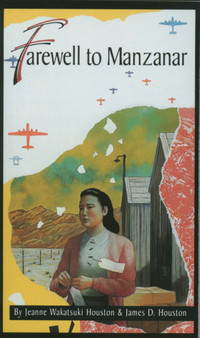
Books to Read: Farewell to Manzanar by Jeanne Wakatsuki Houston + a simplified history of World War II

This isn't a book that I would usually read, but I'm glad I did.

This book is a memoir about a girl named Jeanne who gets sent to an internment camp with her family. For those of you who don't know about World War II and Japanese internment, I'll give you a brief and dumbed-down and overly simplified history lesson that basically will only help you understand Japanese internment:

Germany: Man, this stinks. We just got beat in World War I, and now we have nothing.
Hitler: Hey, we're a force to be reckoned with. We're gonna build some war equipment and an army.
Germany: But we're not allowed to build an army. Remember?
Hitler: Who cares? Like I said: we're a force to be reckoned with.
Germany: Okay. We'll start building an army.

Random country that's not Germany: Hey, Germany is building war equipment. They're not supposed to do that.
Other random country that's not Germany: It's okay. It seems to be helping their economy, so maybe they'll just leave it at that. In the meantime, we should deal with our own economic problems and not build any war equipment whatsoever.

Germany: Okay. We got an army.
Hitler: Good. Let's go invade some countries and send people who aren't as pure and superior as us to concentration camps to ultimately die.
Germany: Um . . . okay.

Japan: Hey! Thanks for being friends with us, Germany!
Germany: No prob.
Japan: Yeah. Anyway, we're going to go to Pearl Harbor. See you later.

Japan: Yup. There's Pearl Harbor. Okay. Drop the bombs.
United States: WOAH. Hey, Japan, what's with that?
*silence*
United States: Oh, okay. We see how it is. We're going to open up factories and create more war equipment than you will ever see in one hundred years. Just watch.
Franklin Roosevelt: While we're doing that, I'll sign Executive Order 9066 and give the military some more authority.
United States Military: Cool. Now, obviously, the Japanese are a major threat to our society and we can't do anything to them without violating the constitution, but who cares? We'll send all of the Japanese to internment camps and hold them there for a few years and make sure that they're not all secretly spies.

*a few years later*

United States: Hey, Japan--we just dropped a bomb on you and we kind of don't want to do another. Do you surrender?
Japan: No.
United States: Okay. We just dropped another bomb. Do you surrender?
Japan: Okay.
United States: Okay. Germany has already surrendered, so . . . I guess the war is over. We can let the Japanese out of the camps now.

*the end*

Anyway, people in the media started saying "THE JAPANESE ARE ALL SPIES!!!!" and for some reason, people believed it. So, the Japanese were sent to internment camps. They were NOT at all like concentration camps. Not very many people died in internment camps. However, the camps themselves were hastily built and the conditions were terrible, and it was undeserved, so even though it was not as brutal as the concentration camps in Germany, it was still terrible.

I really recommend this book if you're interested in World War II. I enjoyed it and I'm glad that I read the book.

Now, let's talk about the book a little bit.

  • I learned a lot. Anyone who knows me knows that I like to learn when I read for pleasure. This book explained the conditions of life at the interment camp Manzanar with great detail. (There was a whole chapter about the latrines.) It was like the author was looking at a photograph and writing what she saw.
  • This book was really, really well written. I was expecting very boring writing because most memoirs only tell the story, but this story was told with style. There were some fantastic metaphors and similes that really enhanced the story, beautiful imagery, and everything was organized well. There were chapters from different perspectives and vivid words, and I was surprised that someone who was simply writing a memoir actually took the time to not just tell the story, but craft the story.
  • Everything about the book felt very sincere. This book is a memoir, and the author wrote it to tell people about her story. But the author included some very powerful personal thoughts and feelings that I really appreciated while I was reading.
  • The author did embellish some things: a lot of the conversations and her dad's interview. However, the author embellished to highlight certain points--to show that the Japanese really were citizens, for instance. It just added to the book and my understanding of the situation.
  • The book tells you about something that doesn't get quite enough attention. I didn't learn much about Japanese Internment, and this book gave me all of the information I needed about it.
All in all, I recommend this book to anyone 12 and over. I'm recommending that you read it at that age because by then, you've at least started to learn about WWII in school and you'll understand it better. The book also explores subjects like abuse, alcoholism, racism (of course), and other forms of judgment that I think you would really notice and understand at that age. So, go read it.

Tuesday, May 13, 2014

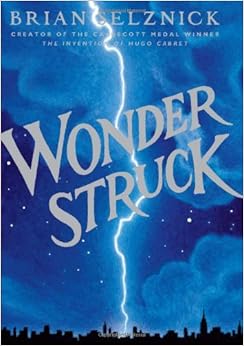
A book that I feel kind of conflicted about: Wonderstruck by Brian Selznick

**To view spoilers, drag your mouse over the empty space between"<SPOILER>...<SPOILER>"

Um . . .
This book was written by the same guy who wrote The Invention of Hugo Cabret. I really enjoyed that book, so I've been wanting to pick up this book for quite some time now.
I finished this book in less than a few hours because most of it is just pictures. Basically, it's about a boy named Ben who is partially deaf. His mom has died recently, and now he's starting to wonder who his father is. He finds a lot of these clues and eventually pieces the story together.

Let's talk about the positives:
  • The book was split into two stories that eventually melted together. One story was told in one words, and one story was told entirely in illustrations.
  • The illustrations were brilliant.1 <I'm going to count this part as a spoiler because it's something that I want anyone who reads it to figure out on their own> The author dropped a lot of clues in the illustrations which were sometimes difficult to pick up on. (For example, if you didn't pick up on the fact that the stories are from different times, there were other subtle hints. There was a newspaper article about Charles Lindbergh in one of the illustrations, and in the text it said that one of the news stories was about kidnapping. I'm not sure if that's just a coincidence, but if it's not, I think that's a cool detail. <SPOILER>
  • Brian Selznick has the ability to write. Sure, he's no JK Rowling, but he can tell an interesting story in pictures and words, which I really appreciate.
  • It was a fun reading experience. It required a lot of concentration to read this book. I found myself flipping back through the pages when a connected a clue from the text and the pictures and I wanted to make sure.
  • I'm kind of rewording my second point, but the illustrations were phenomenal. There were some illustrations where I literally whispered the word "Woahhhh" to myself as I was reading it.
Now for the negatives:
  • The writing was very descriptive. I think this is partially due to the fact that the author is also the illustrator. I just feel like more of the book had sentences like "The bookshelf sagged from the weight of the dusty gray textbooks" whereas most books I'm used to reading have sentences like "The dusty gray textbooks reminded Bob of the time he did something that gets the reader emotionally attached to him."
  • The ending. <I suppose it's a spoiler> It was just like "Ben reunited with his grandmother and hugged her. They looked at the moon. The end." I was left with lots of questions. What happens next? Does Ben live with his grandmother? Does Ben get a job at the museum? Does Ben ever return to Gunflint Lake? What profession does Jamie take up? <SPOILER>
  • The author did too good of a job with illustrating. It made me dread the text. To be honest, the writing was kind of bland. There were some interesting metaphors and adjectives, but a lot of them were cliché. (Ex: twinkling stares, glow of the moon, swaying grass) So, I would trudge through a few pages of text and then be rewarded with some awesome pages filled with pictures.
  • There wasn't a plot for the first 400 pages. It was just like "Ben's deaf. Now for some pictures of a girl running and looking scared."
  • The information dump. <SPOILER> You know how in the beginning of books, there's usually a lot of "information dumps?" (Ex: Kathryn liked volleyball, soccer, cats, chairs, the color pink, sunsets, strawberries, pina coladas, getting caught in the rain, etcetera) Well, there was an information dump at the end of the book. (A reiteration: "I'm your grandmother. I gave birth to your father. Your father was not deaf. I am deaf. Your grandfather was deaf. Your grandfather died. Now let me tell you about my life story . . .) I didn't think that was a clever enough way of adding in the information. <SPOILER>
  • This one's going to be a bit of a rant. But I feel like having deaf characters was too convenient. It made it far too easy for the author to tell the story better. I suppose that's a good thing, but the guy who wrote this book is an illustrator. I think it was just a little too easy for him to have the characters write down what they were thinking. There's nothing wrong with having deaf characters, but I was just thinking the whole time "It's really convenient that their conversations are being written down on paper, isn't it?"
  • The plot was interesting, but I feel like the author could have done more with it. <SPOILER> The girl's mom was a famous movie star . . . . . . . . . . . and???? I was just waiting for something cool to happen with that. I was waiting for someone to say "Hey! It's that famous movie star's daughter!" and I was waiting to hear her mother say something like "My daughter is deaf. I was embarrassed, so we told no one outside of the family" and I was waiting for a huge media scandal involving her, but I feel like the girl's parents were barely even a part of the book. <SPOILER>
Somehow, the positives outweigh the negatives. What I really like is that most of the clues in the illustrations were very clever, and they added a whole other layer to the story. I enjoyed the book, and I recommend it.

1  One of the lovely illustrations.

Thursday, May 8, 2014

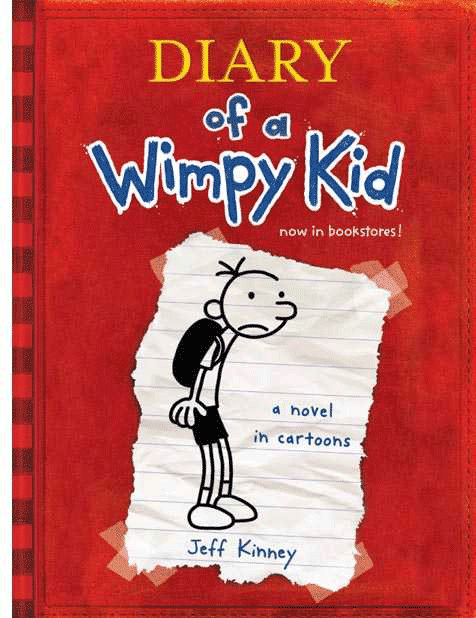
Books that I can't read in public anymore because I'll be judged: Diary of a Wimpy Kid by Jeff Kinney

One thing that I hated about transitioning from kid to teenager were the habits you were expected to change. I grew out of my Magic Treehouse books, I abandoned shows on Nickelodeon, and crawling up the stairs on my hands an feet was frowned upon.
One series that I do miss is the Diary of  Wimpy Kid series. I'm sad because I know that if I read them now, I won't be able to enjoy them as much. Some of the jokes I read years ago would probably just seem so stupid to me now.
However, I do recommend the series to young readers. It's like an epic newspaper comic about real life problems that I somehow find myself relating to more now than I did before, because I used to be quite popular. Then things went downhill, but let's talk about the book.
I really enjoyed the books. I remember completing the 2nd book in the series when our power went out and I had to read by candlelight. See? I have memories with these books. Go and make some memories of your own.

Also, if you like this series, I recommend The Loser List by Holly Kowitt, which I read a while back.

Wednesday, May 7, 2014

Books to Read: The Trial by Jennifer Fisher Bryant

I would like to thank the author of this book.
I remember loving this book so much and being captivated by how poetic and beautiful it was. Sometimes, less is more, and this book was 176 pages with big text and small words and it told the story perfectly. It's about a 12 year old girl named Katie who gets to be inside of the courtroom of the Charles Lindbergh case (the one where his young son was murdered.)

I liked this book because I got to learn, and it had a lot of emotion and it was interesting and I also like quick reads, and it was just all around amazing. I just find some sort of fascination in short books that tell beautiful little stories. Yes, every once in a while, I like to read long and epic sagas about magic and death, but sometimes, I like to read these small but compelling stories.

I recommend the book for everyone of all ages. It was fantastic.

Tuesday, May 6, 2014

Books to Read: The Girl Who Could Fly by Victoria Forester

This book was really good. It's about a girl who can fly. However, the book turns into this really cool mystery and I couldn't put the book down. I absolutely loved it. Once you get past the first 50-100 pages, it gets really good. It's a great book full of smart kids with amazing abilities, and I completely recommend it. There are also moments in the book where I was just like "Yeah! You show them how awesome you are!" and other where I was like "Someone. Is going. To die."
This is one of those books that I think people of all ages would be able to enjoy. It is about an almost teen aged girl who has a supernatural ability, but she's also just another kid dealing with low self-esteem and wanting to be free, and I feel like everyone can relate to that.
Highly, highly recommend.

Books to feel slightly disappointed about but this is much too long of a title to call it that, so I'll label it as Books to Read: Kendra Kandlestar and the Box of Whispers


This was a . . . a book.
Here are the problems I had with the book:
  • It was a bit of a generic "female heroine has to save the world against all odds" book.
  • Her name. It's Kendra Kandlestar. It annoys me.
  • The book was kind of cliché. It didn't stand out much.
  • You know when authors having dialogue where the characters say everything? (Ex: "You're stupid," Mark says. "You're ugly," Beth says. "You're mean," Mark says. "We should be kind and compassionate towards one another," Tyler says.) Well, Kendra declares everything in this book. Everyone declares everything in this book. "You're stupid," Mark declares. "You're ugly," Beth declares. "You're mean," Mark declares. "We should be kind and compassionate towards one another," Tyler . . . DECLARES!!! I remember the first time the author used "declared" I thought it was pretty clever. The second, I thought to myself "I would probably use the word more than once too. It's such a nice word." By the end of the book, I absolutely hated the word with all of my heart.
  • I had already outgrown the book when I read it at the age of ten.
Things I liked about the book:
  • It seemed to wrap itself up just enough so that I didn't have to read the rest of the series.
  • It makes for a nice decoration.
  • It makes for a nice paperweight.
  • There's some mystery to it, and I think that kids would enjoy it, and the characters were likable, and despite being kind of cliché the plot was interesting, and the writing was decent, with the exception of the overuse of the word "declared."
I recommend this book to children and people who have not read Harry Potter yet, because if you read Harry Potter, you won't be able to appreciate this book nearly as much.

Books to Read: All the Lovely Bad Ones by Mary Downing Hahn

It's been a while since I've read this book, but I remember just enough about it to know that I love this book.
It's about these two siblings who go to their grandmother's inn for the summer. Their grandmother is complaining about how some other hotel is getting tons of guests because ghosts have been reported there. So, to help business, the two kids pretend to be ghosts. I don't want to reveal too much, but let's just say that's not the entire plot.
I remember that this book was very entertaining, and that it had some scary and mysterious moments that I thoroughly enjoyed. The ending was kind of vague, but it was probably the creepiest part of the book. I also liked that it had interesting side characters, like these two bicyclists who ride over a hundred miles each day.
I recommend this book for children and young teens. I think that anyone older than that would just be rolling their eyes the entire time, which is a shame because it's a great book. It's pretty short, but it's really interesting.

Saturday, May 3, 2014

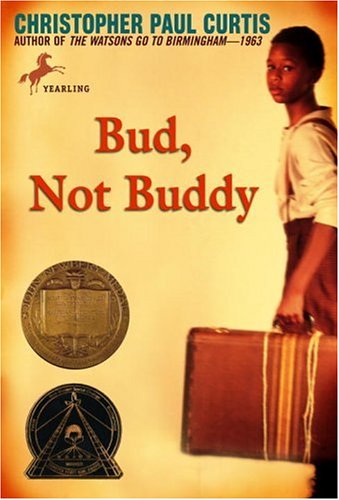
Books to Read: Bud, Not Buddy by Christopher Paul Curtis

So, this was everybody's required reading for fifth or sixth grade. Because it was quite a while ago for me, this review won't have any spoilers.

Basically, it's about a kid named Bud (and don't you DARE call him Buddy) who has no parents, and he's on the run. His mom died, but he thinks she left a clue about who his dad is.

Let's just talk about why this is a great book.
  • It sounds like it was written by this kid. It didn't feel like an award-winning author was telling a story. It felt like you were having a long conversation with Bud about his life.
  • It's historical fiction, so I got to learn a little during this book. Yay!
  • It was powerfully told. It's not like "I walked to the store and bought bread." It was like "I MARCHED OVER TO THAT STORE AND I WANTED BREAD, SO I GOT IT!" I hope that made sense.
  • There's a little bit of mystery to it, so that's also a plus.
  • It's just overall a great book that I highly recommend. Look at those medals. This book was deserving of them.

Books to Read: The Lightning Thief by Rick Riordan

There are so many books to choose from, and it's really disappointing when you go out and buy a book that you don't like. So, I've created this segment where I recommend some of my absolute favorite books.

The Lightning Thief by Rick Riordan is the first book in the Percy Jackson and the Olympians series. The book after this is called the Sea of Monsters. There's another series after that called the Heroes of Olympus, so I'm really recommending all of the books in the series, but this is the starter.

Also, If you've seen the movies, I implore you to read the books, because the movies did not do the books justice.

The Lightning Thief is about a boy named Percy who is a little bit a trouble maker. He's not good in school (partially due to his dyslexia) and he has to constantly switch schools. However, he's a pretty special kid, because he's a demigod. A demigod is the child of a god and a mortal, and Percy finds out that his dad is Poseidon, which is one of the most powerful gods there is. So, he's sent to a camp with other demigods, and naturally he has to go on some sort of quest.

It's been a while since I've read this book, but it was one of the first books that I picked up myself and thoroughly enjoyed. For that, I recommend it.

I recommend this book for fantasy lovers 10 years old and up. I don't think that adults would appreciate the series as much, but I definitely don't think that should stop anyone from reading it.